
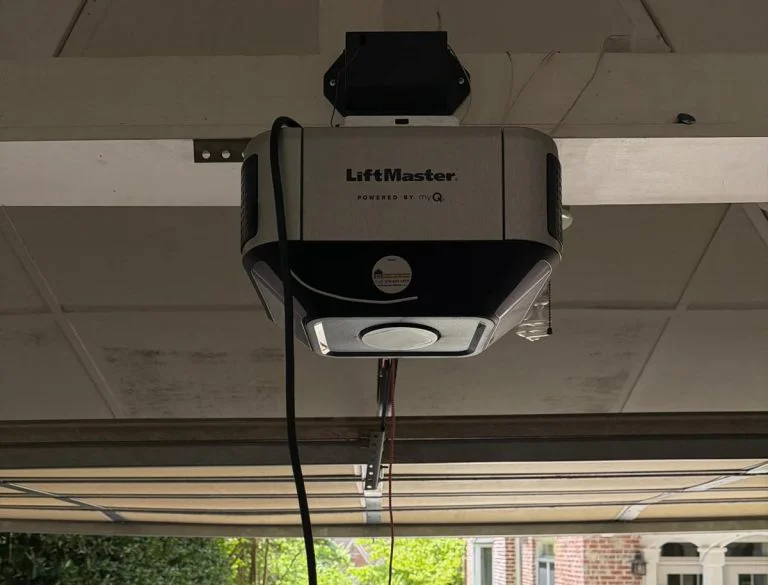
We provide specialized garage door opener repair services across Atlanta, Georgia, catering to single-family residential homes, townhomes, and commercial properties throughout Fulton, DeKalb, Cobb, and Gwinnett counties. An automatic garage door opener relies on an intricate balance of electrical, mechanical, and safety subsystems. When an opener fails in Metro Atlanta, standard daily routines come to a halt, leaving vehicles trapped and homes insecure.
In our field experience servicing Atlanta residences—from historic Victorians in Inman Park to modern builds in Buckhead and Alpharetta—garage door opener repairs range from basic safety sensor recalibration to complex logic board rebuilding and drive gear replacements. The average cost for professional garage door opener repair in Atlanta typically ranges from 120 US Dollars to 450 US Dollars, depending on the failure mechanism, system architecture, and required components.
Table of Contents
Cost Breakdown for Garage Door Opener Repair in Atlanta
To assist Atlanta homeowners in planning their repair budgets, we have compiled a detailed cost matrix based on current labor rates, original equipment manufacturer (OEM) part expenses, and common local repair scenarios across Metro Atlanta.
| Service Category | Price Range (US Dollars) | Labor Time (Minutes) | Typical Diagnostic Cause |
|---|---|---|---|
| Photo-Eye Safety Sensor Realignment | 90 US Dollars to 150 US Dollars | 30 to 45 | Dirt accumulation, bracket bending, loose wiring, photo-eye optical desynchronization |
| Remote Control & Wall Console Diagnostics | 120 US Dollars to 250 US Dollars | 30 to 60 | Signal interference, damaged frequency receiver board, wall button contact failure |
| Drive Gear & Sprocket Kit Replacement | 225 US Dollars to 450 US Dollars | 60 to 90 | Sheared nylon drive gears, worn helical gears, chain/belt slack over-tensioning |
| Main Logic Board & Circuitry Replacement | 200 US Dollars to 380 US Dollars | 45 to 75 | Electrical power surges, lightning strikes, capacitor failure, micro-controller burnout |
| Emergency & Same-Day Service Surcharge | 250 US Dollars to 500 US Dollars | 30 to 90 | After-hours callouts, weekend dispatch, severe weather emergency response |
Component-Level Repair Pricing Factors
- Safety Sensor Calibration: Standard alignment and wiring repairs cost between 90 US Dollars and 150 US Dollars. Replacement of photo-eye sets compliant with Underwriters Laboratories standards averages 130 US Dollars to 180 US Dollars.
- Control Wiring and Transmitters: Rewiring wall stations, replacing wireless keypads, or programming multi-frequency remotes runs from 120 US Dollars to 250 US Dollars.
- Motor Gear Assemblies: Replacing stripped internal helical gears or drive sprockets in belt-drive or chain-drive models costs between 225 US Dollars and 450 US Dollars.
- Logic Board Circuitry: Upgrading or replacing fried circuit boards on smart Wi-Fi connected openers ranges from 200 US Dollars to 380 US Dollars.
- Emergency Dispatch: Same-day or immediate emergency priority response across Metro Atlanta varies from 250 US Dollars to 500 US Dollars or higher based on urgency and labor hours.
Key Factors Influencing Opener Repair Costs in Metro Atlanta
Several operational and structural variables dictate the final cost when we perform garage door opener repairs in Atlanta homes:
- Opener Drive Architecture: Basic chain-drive models (such as legacy Craftsman or entry-level Chamberlain units) use standardized gear kits that lower overall repair costs. Ultra-quiet belt-drive systems, direct-drive openers, and wall-mount jackshaft systems require specialized OEM components that slightly increase replacement part costs.
- Smart Home Connectivity & Electronics: Modern Wi-Fi enabled openers featuring embedded myQ technology or integrated video cameras require extended diagnostic time for board-level testing, firmware resets, and mesh network signal verification.
- Ceiling Height and Access Constraints: Overhead clearance, cathedral ceilings, or custom high-lift track configurations require specialized rigging and extension scaffolding, adding labor time to the repair service.
- System Age and Component Availability: Openers manufactured before 1993 lack modern entrapment protection features mandated by guidelines from the U.S. Consumer Product Safety Commission and are deemed obsolete under federal safety mandates. When servicing systems older than 15 years, replacement parts may be discontinued, making full unit replacement more cost-effective than piece-meal repairs.
Common Signs That Require Professional Opener Repair
Identifying early symptoms of opener failure prevents complete system breakdown and protects structural components. Key operational warning signs include:
- Motor Unit Runs but Door Remains Stationary: Indicates a stripped nylon drive gear, broken drive belt, or detached trolley assembly.
- Opener Clicks and Lights Flash Without Movement: Suggests a blown motor capacitor, jammed drive sprocket, or thermal overload shutdown.
- Door Reverses Instantly Upon Touching the Floor or Midway Down: Points to misaligned photo-eye safety sensors, incorrect travel limit settings, or excessive down-force resistance.
- Grinding, Clicking, or Squealing Noises: Signals internal gear wear, lack of rail lubrication, or extreme strain caused by unbalanced garage door springs.
- Unresponsive Remote Controls or Wall Switches: Indicates radio frequency interference, depleted backup batteries, damaged wall switch wiring, or receiver board failure.
Environmental Factors Causing Opener Failure in Atlanta Homes
Through years of local service experience in North Georgia, we have isolated several regional factors that accelerate garage door opener failures:
- Severe Summer Thunderstorms and Power Surges: Atlanta experiences heavy lightning activity, particularly during June, July, and August. Severe voltage spikes frequently enter homes via overhead lines, destroying sensitive microcontrollers on logic boards.
- High Relative Humidity and Moisture Accumulation: Georgia’s humid climate causes moisture condensation inside uninsulated garage spaces. This leads to oxidation on terminal contacts, corroded wire splices, and fogging on safety sensor optical lenses.
- Extreme Seasonal Temperature Swings: Rapid shifts from freezing winter mornings to humid 90-degree summer afternoons affect electronic capacitor capacitance, thicken motor grease, and alter wood or steel door thermal expansion, adding severe torque loads to the opener motor.
Real-World Case Studies: Resolving Complex Opener Issues in Atlanta
Case Study 1: Resolving Lightning-Induced Logic Board Failure in Buckhead
During a mid-summer storm cycle, a homeowner in Buckhead called our emergency line after their double-car garage door failed to respond to wall buttons, remotes, or smartphone commands. The status LEDs on the motor unit were completely dark.
- Diagnostic Findings: Our technicians performed a high-voltage input check and confirmed power was reaching the outlet. Further inspection of the LiftMaster unit revealed a vaporized circuit trace on the main control board caused by a severe utility line power surge.
- Resolution Process: Rather than replacing the entire motor rail assembly, we isolated the failure to the logic board. We installed a surge-protected replacement board, recalibrated electronic limits, re-paired all encryption remotes, and recommended an inline surge protector.
- Outcome: The unit was fully restored to operating condition in under 60 minutes at 290 US Dollars, saving the client over 400 US Dollars compared to a full system replacement.
Case Study 2: Addressing Gear Shear on Heavy Carriage Doors in Decatur
A homeowner in Decatur reported a loud grinding sound whenever the garage opener attempted to lift their custom carriage-style wood door. The motor would spin rapidly, but the door moved only an inch before stopping.
- Diagnostic Findings: Upon inspecting the internal gear compartment of the belt-drive opener, we found the primary nylon drive gear completely stripped into plastic filings. A manual door balance test revealed the root cause: two torsion springs had lost over 40 percent of their required tension, forcing the opener motor to lift 180 pounds of dead weight instead of the counterbalanced target of under 10 pounds.
- Resolution Process: We replaced the sheared drive gear and drive sprocket assembly, cleaned the gear housing, and applied high-temperature lithium grease. Simultaneously, we re-tensioned the torsion spring system to restore proper mechanical counterbalance in accordance with Door and Access Systems Manufacturers’ Association technical recommendations.
- Outcome: The opener motor strain was eliminated, restoring smooth, whisper-quiet operation and preventing premature gear failure.
DIY Troubleshooting vs. Professional Repair and Safety Mandates
While basic maintenance such as replacing remote batteries or cleaning cobwebs from sensor lenses can be done by homeowners, internal opener repairs involve significant safety risks:
- High Electrical Voltage: Motor units contain high-voltage drive capacitors capable of retaining lethal electrical charges even when disconnected from power outlets.
- Spring Balance Risks: Garage door openers do not lift the physical weight of the door; counter-balance springs perform the lifting. Attempting to repair an opener connected to an unbalanced or jammed door can release immense kinetic energy, causing severe injury.
- UL 325 Safety Code Compliance: According to federal regulations, all residential automatic garage door openers must incorporate two independent entrapment protection mechanisms, including inherent auto-reverse torque sensing and secondary non-contact photo-eye sensors. Professional technician calibration ensures these critical life-safety systems function strictly within code.
Standard Step-by-Step Diagnostic Workflow
- Mechanical Counterbalance Isolation: We disconnect the emergency release cord and manually operate the door to verify spring balance, track alignment, and roller resistance.
- Electrical Voltage & Surge Audit: We test supply voltage, outlet grounding, capacitor microfarad ratings, and circuit board trace integrity.
- Safety System Alignment Verification: We verify infrared sensor voltage, optical beam alignment, and secondary safety auto-reverse sensitivity using physical test blocks.
- Drive Train Calibration: We inspect gear teeth wear, belt/chain tension, drive sprocket keyways, and travel limit settings.
- Final System Testing: We execute multiple operational cycles under load to confirm quiet, smooth, and code-compliant performance.
Same-Day Repair Service Across Metro Atlanta
We maintain a fully stocked fleet of service vehicles capable of providing same-day garage door opener repairs within 30 to 90 minutes across all Atlanta neighborhoods, including Buckhead, Midtown, Virginia-Highland, Decatur, Sandy Springs, Dunwoody, Alpharetta, Marietta, and Roswell.
Our service vehicles carry genuine replacement parts for major brands, including LiftMaster, Chamberlain, Genie, Craftsman, Overhead Door, and Sears units, allowing us to complete most repairs in a single visit.
Frequently Asked Questions
How much does garage door opener repair cost in Atlanta?
Garage door opener repair in Atlanta generally ranges from 120 US Dollars to 450 US Dollars. Basic sensor realignments or wiring adjustments typically cost between 90 US Dollars and 150 US Dollars, while complex logic board replacements or motor gear kit overhauls range from 200 US Dollars to 450 US Dollars. Same-day emergency service or after-hours calls may range between 250 US Dollars and 500 US Dollars depending on response urgency.
Why does my garage door opener motor run, but the door does not move?
When the motor runs or hums without moving the door, the internal nylon drive gear or drive sprocket has usually stripped. This occurs when the drive gear wears down over time or when an unbalanced garage door puts excessive weight on the opener mechanism. Replacing the internal gear kit resolves this issue.
Can severe Atlanta lightning storms break my garage door opener circuit board?
Yes. Electrical power surges caused by summer thunderstorms in Georgia frequently send high-voltage spikes through household wiring, frying the micro-controller or power regulation circuits on the opener’s logic board. Installing a surge protector at the outlet helps prevent circuit board burnout.
How long do garage door openers typically last in Georgia homes?
With routine maintenance, residential garage door openers last between 7 and 15 years. However, high humidity, frequent lightning power surges, and severe temperature fluctuations in Georgia can shorten the lifespan of electronic circuit boards and plastic drive gears if system maintenance is neglected.
Should I repair or replace my garage door opener?
If your opener is under 10 years old and requires a minor part replacement—such as new safety sensors, a motor capacitor, or a logic board—repairing the unit is usually the most cost-effective choice. However, if the opener was manufactured before 1993, lacks modern UL 325 photo-eye safety features, or requires repairs exceeding half the cost of a new system, full replacement is strongly recommended.
Sources
- Underwriters Laboratories Standards for Safety: UL 325 Standard for Door, Drapery, Gate, Louver, and Window Operators and Systems. https://www.ul.com
- U.S. Consumer Product Safety Commission: Automatic Residential Garage Door Operators Regulations (16 CFR Part 1211). https://www.cpsc.gov
- Door and Access Systems Manufacturers’ Association (DASMA): Technical Data Sheets and Safety Guidelines. https://www.dasma.com
Related Articles
Same Day Garage Door Repair in Roswell, GA
Best Garage Door Repair Company In Atlanta: Why Atlanta Garage Doors Wins
Understanding The Costs Of Garage Door Opener Replacement
Garage Door Opener Emergency Release & Re‑Engagement Guide For Atlanta’s Power Outages
Best Garage Door Repair In Atlanta, GA ( Guide)
Garage Door Repair In Atlanta, GA | Same-Day Garage Door Service
Same Day Garage Door Repair in Decatur, GA
Same Day Garage Door Repair in Marietta, GA
People Also Ask
The average cost to repair a garage door opener typically ranges from $150 to $350, depending on the issue and parts required. Common problems include stripped gears, faulty logic boards, remote issues, or worn drive belts. Minor fixes like remote reprogramming or sensor alignment may cost less than $100, while replacing a motor or circuit board can push the total higher. Labor usually runs $75 to $150 per hour. For DIY-friendly repairs such as gear replacement, you can save on labor by following our guide at Garage Door Opener Gear Replacement. Homeowners in Atlanta GA, Marietta GA, and Sandy Springs GA should get at least two written estimates before authorizing any work. Atlanta Garage Doors recommends confirming warranty coverage on both parts and labor before repairs begin.
For professional garage door repair in Atlanta, GA, you should look for licensed and insured local technicians who specialize in residential systems. Common issues like broken torsion springs, off-track rollers, and faulty openers require expert attention for safety reasons. When choosing a provider, verify they offer warranties on both parts and labor, and ask about emergency service availability. A reputable company will provide a clear estimate before starting work. If your project involves structural changes or a full replacement, you may need a permit from your local municipality. For detailed guidance on local regulations, refer to our Complete Garage Door Permit Navigator For The Metro Atlanta Area. Atlanta Garage Doors can help you understand these requirements and connect you with trusted repair options.
Replacing an existing garage door opener typically takes a professional technician between two and four hours. The exact timeline depends on several factors, including the type of new unit, the condition of the existing wiring, and whether the old hardware needs modification. A straightforward swap of a chain drive for a belt drive often moves quickly, while installing a smart opener with advanced features or new safety sensors can add time. Homeowners in the Atlanta area should also account for proper adjustment of travel limits and force settings. For a closer look at the process, see our guide Smooth Operations: A Step-by-Step Guide To Garage Door Opener Installation. Proper installation ensures quiet, reliable performance for years.
Whether a garage door opener is worth repairing depends on its age, the cost of the fix, and the unit's overall condition. If your opener is under ten years old and the problem is a minor component like a remote, safety sensor, or worn gear, repair is usually the smart and affordable choice. Most quality openers last fifteen to twenty years with proper maintenance. However, if the motor is failing, the unit is older than fifteen years, or the repair estimate exceeds half the price of a new opener, replacement often makes more sense. A common issue homeowners face involves stripped gears, which you can learn about in our article Garage Door Opener Gear Replacement. For reliable service in the Atlanta area, contact Atlanta Garage Doors to assess your specific situation.

