
National Chains vs. Local Garage Door Services: Which Is Better for Atlanta Homeowners?

When your garage door suddenly refuses to open at 7 a.m. on a workday—or worse, makes a sound like a bag of rocks tumbling through a metal drum—you need help fast. The question is: do you call the national brand with the familiar jingle, or the local company whose truck you’ve seen in your neighborhood?

The answer isn’t one-size-fits-all, but in Atlanta, the scales tip heavily toward local expertise. Here’s an honest, data-driven comparison to help you make the right call for your home, your wallet, and your peace of mind.

Why This Decision Matters More in Atlanta Than Anywhere Else

Garage doors aren’t just big moving walls—they’re complex mechanical systems exposed to one of the most demanding climates in the country. Atlanta’s humid subtropical environment creates a perfect storm for garage door components:

  • Humidity that consistently exceeds 70% accelerates rust on springs, hinges, and tracks, slashing component lifespan by as much as 40%

  • Summer temperatures regularly surpassing 90°F cause metal expansion and misalignment in tracks and springs

  • Seasonal temperature swings create expansion and contraction cycles that loosen hardware over time

  • Heavy rain and storms introduce moisture that warps wood panels and corrodes electrical connections

A technician who understands these local factors will diagnose problems differently than someone following a generic corporate checklist. That difference often translates to catching a $20 cable issue before it becomes a $400 spring replacement.

National Chains: What They Actually Offer

National garage door companies succeed for a reason. Their business model delivers certain advantages that appeal to homeowners who value predictability.

The Legitimate Benefits

National chains excel at standardization. You’ll typically encounter:

  • Consistent pricing across service areas—the quote you get in Buckhead will match the one in Brookhaven

  • Extensive warranties backed by corporate resources, often covering parts and labor for longer periods

  • Brand recognition that provides a sense of security, especially for new homeowners unfamiliar with local options

  • 24/7 call centers with centralized dispatch, meaning someone will always answer the phone

These features matter. If you’re managing rental properties across multiple states or need warranty work tied to a specific manufacturer, a national chain may be your most practical option.

The Hidden Trade-Offs

However, the corporate model comes with structural limitations that directly affect your repair experience:

Response Times That Don’t Match Atlanta’s Pace: National chains typically dispatch technicians from regional hubs, not neighborhood locations. Emergency service can mean waiting 24-48 hours—a lifetime when your car is trapped inside or your home is unsecured. Local Atlanta companies routinely achieve 60-90 minute response times for critical issues.

Rotating Technicians with Limited Local Knowledge: Large companies often cycle technicians through different territories or use subcontractors. The person who shows up may never have serviced a garage door in Atlanta before. They won’t know that homes in Virginia Highland require different maintenance approaches than new construction in Alpharetta, or that humidity-related spring fatigue is a predictable annual issue here.

Incentive Structures That Encourage Upselling: Many national technicians operate under performance metrics that reward replacement over repair. A recent survey found that 34% of homeowners reported being pressured into unnecessary replacements by national chain technicians. When a $20 sensor adjustment would solve the problem, some corporate protocols default to recommending full system replacements.

Corporate Bureaucracy When Problems Arise: If something goes wrong—and with mechanical systems, it sometimes does—you’ll navigate a corporate customer service maze rather than speaking directly to the person who performed the work.

Local Services: The Atlanta Advantage Explained

Local garage door companies operate under a fundamentally different set of incentives and capabilities. Here’s what that means for you:

1. Same-Neighborhood Response Times

When you call a local Atlanta company, you’re calling someone whose shop is likely within 10-15 miles of your home. That geographic proximity translates directly into speed:

  • Emergency service within 60-90 minutes for most Atlanta neighborhoods

  • Same-day appointments for non-emergency repairs

  • Technicians who know traffic patterns and shortcuts across the metro area

For a broken spring or snapped cable—issues that render your garage completely unusable—this speed difference is the difference between a minor inconvenience and a major disruption.

2. Climate-Specific Expertise

Local technicians have repaired thousands of garage doors in Atlanta’s exact climate conditions. They know:

This isn’t theoretical knowledge—it’s accumulated from years of seeing the same issues repeat across the same neighborhoods.

3. Direct Accountability

Local companies live and die by their reputation in the community. The technician who services your door today is the same person whose kids might attend the same school as yours, or who you’ll run into at the Publix on Ponce. That social accountability creates a fundamentally different standard of care:

  • The person you speak with is often the person who performs the work

  • Follow-up questions go directly to the technician, not a call center

  • Issues get resolved faster because there’s no corporate chain of command to navigate

  • Word-of-mouth reputation means every job matters

4. Property Continuity

When you hire a local company, you’re likely to see the same technician year after year. This continuity is invaluable: the tech remembers your door’s history, knows which components were replaced last season, and can spot subtle changes that signal developing problems—slight track shifts from foundation settling, springs wearing unevenly, or early cable fraying.

National chain technicians, by contrast, often encounter your door for the first time on every visit, missing the context that prevents emergencies.

5. Pricing Transparency

Local companies typically offer straightforward, flat-rate pricing without the layered fees common in corporate structures. While national chains may advertise attractive entry-level pricing, the final invoice often includes:

  • Dispatch fees

  • Service call charges

  • Travel surcharges

  • Administrative fees

Local companies tend to quote the full price upfront. You know exactly what you’ll pay before work begins.

Side-by-Side Comparison: National Chains vs. Local Atlanta Services

The following table provides a detailed, objective comparison across the factors that matter most to Atlanta homeowners:

Comparison Factor National Chains Local Atlanta Services
Emergency Response Time 24-48 hours typical; centralized dispatch from regional hubs 60-90 minutes typical; technicians based in Atlanta neighborhoods
Same-Day Service Availability Limited; often requires premium fees Standard offering for most repairs
Technician Familiarity Rotating crews; limited property history Consistent technicians who know your door’s maintenance record
Atlanta Climate Expertise Generic training; may not account for humidity, heat expansion, or local soil conditions Deep understanding of how Atlanta’s humidity (70%+ summer levels) affects springs, tracks, and wood components
Pricing Structure Standardized but often includes hidden dispatch fees, travel charges, and administrative costs Transparent, flat-rate quotes; what you’re quoted is what you pay
Upselling Pressure Higher; corporate metrics may incentivize replacement over repair Lower; reputation-based model prioritizes honest recommendations
Accountability Corporate customer service channels; resolution may require escalation Direct communication with owner/technician; issues resolved personally
Parts Availability Generic, mass-market components Access to local supplier networks plus premium options; faster sourcing for uncommon parts
Warranty Coverage Often extensive, backed by corporate resources Typically 90-day to 1-year labor warranty; may be shorter but more personal
Neighborhood Knowledge Minimal; technicians may service multiple cities in a week Extensive; understands specific needs of historic Decatur homes vs. new Alpharetta builds
After-Hours Support 24/7 call centers (may route to off-site representatives) 24/7 emergency lines answered by local team members
Cost for Common Repairs Spring replacement: $250-$450+ (including fees); Opener repair: $200-$400+ Spring replacement: $150-$350; Opener repair: $150-$300
Long-Term Relationship Value Transactional; different technician each visit Relational; consistent service provider who understands your home

Common Atlanta Garage Door Issues and Why Local Expertise Matters

Understanding the specific challenges Atlanta homeowners face helps illustrate why local knowledge translates into real savings and fewer headaches:

Spring Failure in Humid Conditions

Garage door springs are under immense tension—typically 10,000-15,000 cycles of use before failure. Atlanta’s humidity accelerates corrosion on spring coils, reducing that lifespan by 30-40% compared to drier climates. A local technician knows to recommend corrosion-resistant spring coatings and can spot early signs of fatigue that a chain technician might miss.

Cost context: Spring replacement in Atlanta averages $150-$350 for a single spring, $250-$500 for a dual-spring system. Catching issues early prevents the door from becoming inoperable entirely.

Track Misalignment from Clay Soil Movement

Atlanta sits on expansive clay soil that swells when wet and shrinks during dry periods. This seasonal movement can shift garage foundations by fractions of an inch—enough to throw tracks out of alignment. Local companies see this pattern across entire neighborhoods and know exactly how to adjust for it. Chain technicians may simply lubricate the track and move on, missing the underlying issue.

Opener Strain During Hot Summers

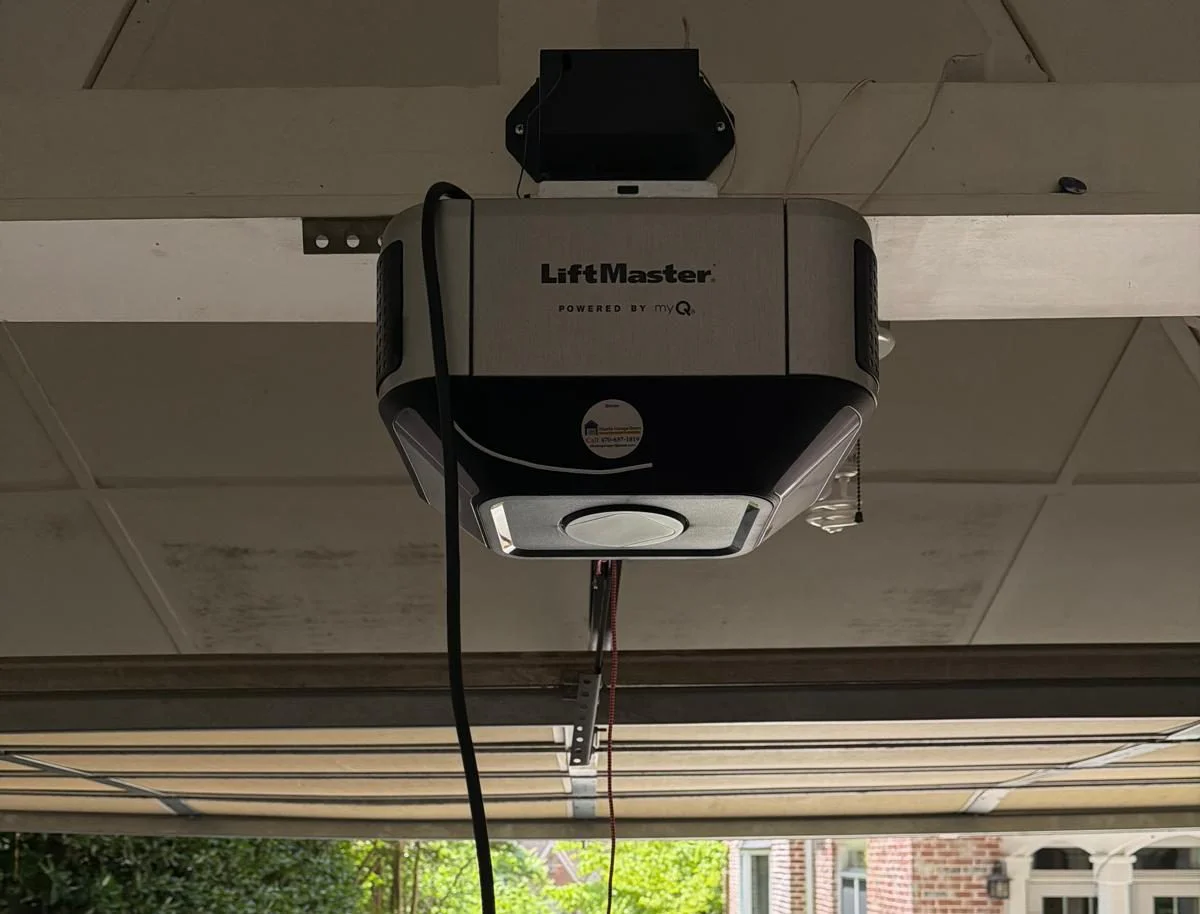
When temperatures push past 90°F, garage door openers work harder against expanded metal components. Motors can overheat, circuit boards can fail, and safety sensors can become unreliable. Local technicians understand which opener models withstand Atlanta summers best and can recommend appropriate upgrades when replacement becomes necessary.

Cost context: Opener repair typically ranges from $150-$300; full opener replacement runs $350-$600 depending on features.

Wood Door Warping in High Humidity

Homes in historic Atlanta neighborhoods—Virginia Highland, Grant Park, Inman Park—often feature original wood garage doors that are particularly vulnerable to humidity. These doors require specialized maintenance that national chain technicians, trained primarily on modern steel doors, may not be equipped to provide.

When a National Chain Might Make Sense

To be fair and transparent, there are specific scenarios where a national chain could be the better choice:

  • Manufacturer warranty work: Some garage door manufacturers require service through authorized national providers to maintain warranty coverage

  • Multi-property owners: If you manage rentals across multiple states, a single point of contact through a national provider may simplify administration

  • New construction with builder contracts: Some builders have pre-existing relationships with national chains that may offer bundled pricing

  • Relocating soon: If you’re moving within months, the long-term relationship value of a local provider matters less

For the vast majority of Atlanta homeowners, however, the advantages of local service far outweigh these edge cases.

How to Evaluate a Local Garage Door Company

Not all local companies are created equal. When choosing a local Atlanta provider, look for:

  • Verified Google reviews with specific mentions of Atlanta neighborhoods (not generic “great service” comments)

  • Clear service area listings that include your specific city or neighborhood

  • Upfront pricing information on their website or provided during initial contact

  • Proper licensing and insurance for Georgia contractors

  • Warranty terms clearly stated in writing before work begins

  • Response time commitments that align with your urgency needs

A quality local company will answer these questions directly and transparently.

The Bottom Line for Atlanta Homeowners

Your garage door is the largest moving part in your home, and in Atlanta’s demanding climate, it requires more attention than the average door. National chains offer standardization and brand recognition, but local Atlanta companies deliver what actually matters when something goes wrong: speed, expertise, and accountability.

The difference shows up in real outcomes: fewer repeat repairs, longer equipment lifespan, and a service experience that treats you like a neighbor rather than a ticket number.

When your garage door demands attention—whether it’s a 2 a.m. emergency or routine maintenance—choose the provider who knows Atlanta’s streets, Atlanta’s climate, and Atlanta’s homes. Choose local.

Related Articles

People Also Ask

The cost to repair a garage door in the U.S. typically ranges from $150 to $350 for common issues, but can vary significantly based on the problem and parts required. Simple repairs like replacing a single panel or fixing a broken spring might cost between $200 and $400, while more complex issues such as opener replacement or track realignment can run from $300 to $600 or more. Factors influencing price include the door's material, labor rates in your region, and whether you need emergency service. It's advisable to get multiple estimates from licensed professionals, as attempting DIY repairs on heavy, tension-loaded components can be dangerous and may void warranties.

The average lifespan of a garage door is typically between 15 to 30 years. This wide range depends heavily on the material, quality of installation, frequency of use, and level of maintenance. Steel doors often last 20-30 years, while wood doors may require more upkeep and have a shorter lifespan. Regular maintenance, such as lubricating moving parts, inspecting springs and cables, and keeping the door clean, is crucial for maximizing its service life. For a more detailed breakdown of factors that influence durability and signs it may need replacement, we recommend reading our internal article, What’s The Average Lifespan Of A Garage Door?.

No, you should not spray WD-40 on garage door springs. WD-40 is primarily a water-displacing solvent and light lubricant, not a proper lubricant for the high-tension, heavy-duty application of garage door springs. Using it can attract dust and grit, creating a grinding paste that accelerates wear. More critically, it can cause the spring to become brittle over time, increasing the risk of a sudden, dangerous snap. For garage door springs, you should only use a dedicated garage door lubricant or a silicone-based spray specifically designed for high-tension springs. This provides the necessary lubrication without damaging the metal or compromising safety. Always follow manufacturer instructions and consider having maintenance performed by a professional.

Choosing a reliable garage door company requires careful research. Start by verifying that the company is licensed, insured, and has positive reviews on multiple platforms. A reputable provider should offer a free, in-person estimate and be transparent about all costs, including parts and labor. Ask about their experience with your specific door type and brand. Ensure they provide a clear warranty on both workmanship and parts. It's also wise to choose a company with 24/7 emergency service for unexpected breakdowns. For guidance on which repairs you can safely handle yourself versus when to hire a professional, our internal article When To Call A Pro Vs. DIY: Garage Door Repair Scenarios provides excellent insights to help you make an informed decision.

When searching for "garage door repair near me," understanding the difference between local and national service providers is crucial. Local Atlanta companies, like ours, offer personalized service, faster response times, and deep community knowledge. Technicians are often owner-operators who take direct accountability for their work. National chains may have broader advertising but often rely on franchised or subcontractor networks, which can lead to inconsistencies in pricing and service quality. For transparent, upfront pricing on common repairs, we recommend consulting our internal resource, Hyper‑Local Garage Door Spring Cost Database For Sandy Springs & Dunwoody. This tool provides hyper-local cost data, ensuring you get fair, competitive estimates from trusted local professionals who understand Atlanta's specific climate and housing styles.

When comparing local versus national garage door repair costs in Atlanta, local companies often provide more competitive and transparent pricing. National chains may advertise low base rates but frequently add significant fees for parts, labor, and emergency services, leading to a higher final bill. Local Atlanta technicians, like our team, typically offer more personalized service and accurate upfront quotes based on the specific regional factors, such as local labor rates and supply chain logistics. For a precise breakdown of repair expenses, including spring replacement, we highly recommend consulting our internal resource, Hyper‑Local Garage Door Spring Cost Database For Sandy Springs & Dunwoody, which provides detailed, hyper-local cost data to help you make an informed financial decision.

Google Facebook

Overall Rating

5.0
★★★★★

508 reviews

Call Now