
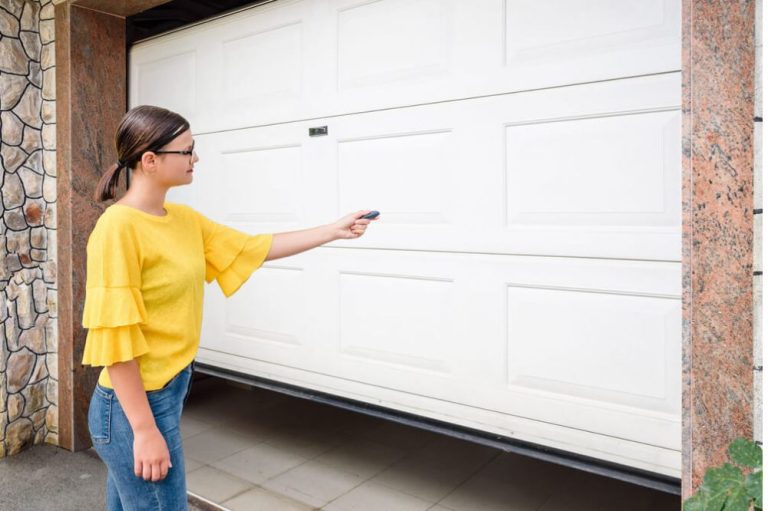
Let’s be honest, we don’t think about our garage doors until they start thinking for themselves. You know the drill: a strange grinding noise, a hesitant stutter on the way up, or that one glorious day it just decides to take a permanent vacation halfway open. Suddenly, your car is a prisoner, your home’s security feels questionable, and your entire schedule is held hostage by a large piece of moving metal and springs. We get it. We’ve seen it all in Atlanta.
As a local garage door company that’s been serving folks from Alpharetta to Marietta and Dunwoody for years, we at Atlanta Garage Doors have learned a thing or two about what makes these systems tick (and groan, and shriek). So, grab a coffee, and let’s have a real chat about the unsung hero of your home’s curb appeal and functionality.
Table of Contents
The Heart of the Home: More Than Just a Door
We often joke that the garage door is the workhorse of the house. It’s the main entrance for most families, the protector of our prized possessions, and a significant part of our home’s first impression. But what’s really going on up there?
It’s a Symphony of Components
A modern automatic garage door is a surprisingly complex system. You’ve got the heavy-duty panels, the tracks that guide them, the mighty torsion or extension springs that do the heavy lifting, the cables that connect everything, the rollers that ensure a smooth ride, and the opener that acts as the brain. When one part decides to go on strike, the whole operation grinds to a halt. That’s when you start frantically searching for “garage door repair near me.”
Residential vs. Commercial: Different Beasts
Now, while the principle is similar, the scale is wildly different. For your home, residential garage doors focus on aesthetics, insulation, and quiet operation. Commercial garage doors, on the other hand, are all about durability, security, and speed for high-traffic areas. We handle both, but the approach is night and day. You wouldn’t put a decorative carriage-style door on a warehouse, right? It’s a bit like using a sports car to haul lumber—possible, but ill-advised and probably expensive.
When Things Go “Clunk”: Recognizing the Cry for Help
How do you know when your door is asking for attention before it stages a full-blown protest? Here are the tell-tale signs we see every day.
The Noises
A smooth door should be relatively quiet. If you start hearing grinding, scraping, or loud banging, something is out of alignment. Squeaking usually means the rollers need lubrication, but that metallic grinding sound? That often points to worn-out opener gears or issues with the track.
The Performance Issues
Is your door hesitating? Moving unevenly? Does it reverse for no apparent reason? These are classic symptoms. Often, it’s a simple fix like cleaning and aligning the safety sensors (those little eyes at the bottom of the door). Other times, it signals a deeper problem with the springs or opener. A door that won’t stay open is a serious red flag—often a sign of a broken spring, which is a job for the pros. Never attempt a garage door spring or garage door cable replacement yourself. The tension in those components is incredibly dangerous.
The Visual Red Flags
Take a look. Are the cables frayed? Is the track bent? Do the panels have dents or cracks? These aren’t just cosmetic issues. A bent track can derail the whole system, and a frayed cable is a snap waiting to happen.
The Decision Matrix: Repair or Replace?
This is the million-dollar question (or, more accurately, the few-hundred to few-thousand-dollar question). It’s the core of our business, and we always give it to you straight.
When Repair is the Right Call
- The door is less than 10-15 years old and generally in good shape.
- The issue is isolated, like a worn-out gear in the opener, a single roller, or a misaligned sensor.
- The panels are intact and the door still provides good insulation and security.
- You’re happy with the style and function. A quality automatic garage door repair can add years of life.
When Installation is the Smarter Investment
- Your door is older than your teenager. Efficiency and safety standards have improved dramatically.
- You’re facing recurring repairs. If we’re seeing you more than your family does, it’s time.
- There’s significant damage to multiple panels or the structure is compromised.
- You want a modern upgrade—better insulation, smart home connectivity, or a fresh look that boosts curb appeal.
To help visualize this, here’s a quick breakdown we often discuss with homeowners:
| The Symptom | Likely Culprit | Typical Fix | Repair or Replace? |
|---|---|---|---|
| Door won’t open/close | Broken spring, Off-track, Sensor issue | Spring replacement, Track realignment, Sensor clean/align | Repair (if isolated) |
| Loud grinding from opener | Worn gear/sprocket | Opener gear replacement | Repair (if opener is modern) |
| Door is crooked or shaky | Broken cable, Worn rollers | Garage door cable replacement, Roller upgrade | Repair (if structure is sound) |
| Multiple dented panels, poor insulation | Age, Impact damage, Outdated design | Panel replacement or full new door | Consider Replace |
| Constant breakdowns, door over 15 yrs old | General system failure | Comprehensive overhaul | Strong Case for Replace |
Why Your Local Atlanta Team Matters
In the age of faceless corporations, you might wonder why you should pick a local outfit. Well, IMO, it comes down to three things: speed, knowledge, and accountability.
“Emergency Garage Door Service” Isn’t Just a Buzzword
When your door is stuck open at 8 PM on a rainy Tuesday, you don’t want a call center in another time zone. You want a local technician who can get there fast. We structure our teams around Atlanta, Alpharetta, Marietta, and Dunwoody for this exact reason. Our emergency garage door service means a real person answers the phone and we dispatch someone from your area.
We Know Atlanta Homes
From the historic styles in Druid Hills to the newer builds in North Fulton, Atlanta homes have character—and sometimes, unique garage door challenges. We understand the common issues with our local climate and housing styles. That local context matters when diagnosing a problem or recommending a new garage door installation.
Reviews Tell the Real Story
We’re proud of our reputation. We encourage you to check our reviews. They aren’t just about fixing doors; they’re about showing up on time, cleaning up afterward, and explaining the “why” behind the repair. That’s the standard we hold ourselves to at Atlanta Garage Doors.
Let’s Get Practical: Your Top Questions Answered
We hear these all the time, so let’s tackle them head-on.
1. “How often should I actually maintain my garage door?”
Honestly? At least once a year. Do a visual inspection, listen for unusual sounds, and test the auto-reverse safety feature by placing a roll of paper towels under the door as it closes. If it doesn’t immediately reverse, your sensors need attention. For a thorough job, a professional tune-up every other year is a smart investment to prevent bigger issues. FYI, we offer a great maintenance plan that takes the guesswork out of it.
2. “Can I just install a new opener on my old door?”
Sometimes, but not always. A modern opener can be a great upgrade for security and convenience. However, if your door itself is old, heavy, or out of balance, a new opener will just strain against the problem. We’ll always check the balance of your door first (you can do this too: disconnect the opener and manually lift the door halfway—it should stay put). If it’s badly balanced, the door needs attention before the opener.
3. “What’s the real deal with smart garage door openers? Are they worth it?”
We love them, but with a caveat. The ability to check, open, or close your door from anywhere is fantastic for peace of mind. Did I leave it open? No problem. Letting in a neighbor? Easy. But the core mechanics—the springs, cables, tracks—still need to be in good shape. A smart opener on a failing door is like putting a smartphone on a horse-drawn carriage. Cool tech, wrong foundation. Get the door healthy first, then add the brains.
Wrapping It All Up
So, there you have it. Your garage door is a partner, not just an appliance. Treat it with a little attention, and it will serve you faithfully. Ignore its cries for help, and it will inevitably make a very loud, very inconvenient point.
Whether you’re facing a sudden breakdown and need a reliable emergency garage door service, you’re considering a stylish new installation, or you just want a professional to give your system a check-up, that’s where we come in. At Atlanta Garage Doors, we’re your neighbors. We’re the ones you’ll see at the local hardware store, and we’re committed to fixing your door right the first time, with honest advice and a smile (even at 8 PM on that rainy Tuesday).
Don’t wait for the full-blown protest. If something sounds or feels off, give us a call. Let’s keep your home’s workhorse running smoothly.
People Also Ask
To check your garage door safety sensors, first ensure the door is fully closed. Locate the two sensors mounted on each side of the door track, about six inches from the floor. Verify that the indicator lights on both sensors are glowing steadily; one is usually green and the other amber. If a light is off or blinking, the sensors are misaligned or obstructed. Clean the lenses gently with a soft, dry cloth to remove dust or cobwebs. Check that the sensor brackets are not loose or bent. If the lights remain off, the wiring may be damaged or disconnected. For a thorough inspection and professional adjustment, refer to our internal article titled Garage Door Security Upgrade Guide For Metro Atlanta Homeowners. Atlanta Garage Doors recommends testing the safety reverse feature monthly by placing a cardboard box in the door's path to confirm the sensors trigger an automatic reversal.
If your garage door safety sensors are misaligned or malfunctioning, the door will often refuse to close. First, check that the sensor lenses are clean and free of debris. Next, ensure both sensors are facing each other directly; a solid or blinking light on the receiving sensor usually indicates alignment issues. To reset the system, disconnect the garage door opener from power for 30 seconds, then plug it back in. This clears the internal memory. After powering up, manually align the sensors until both indicator lights glow steadily. If the door still reverses after closing, the sensors may need professional calibration. For more details on common issues, our internal article titled 'Why Is My Door Suddenly Getting Stuck?' provides further guidance. Use the specific placeholder Why Is My Door Suddenly Getting Stuck? to access this resource. Atlanta Garage Doors recommends testing your safety sensors monthly to ensure proper operation.
WD-40 is not recommended for garage door parts because it is a solvent-based lubricant that evaporates quickly. It is designed for short-term rust prevention and loosening stuck components, not for long-term lubrication. When applied to rollers, hinges, or tracks, WD-40 will attract dust and grime, creating a sticky residue that actually increases friction over time. This added friction can cause premature wear on your garage door opener and components. For proper maintenance, you should use a silicone-based or lithium-based garage door lubricant. For more details on this common mistake, you can read our internal article titled Can I Spray WD-40 On My Garage Door Rollers?. Atlanta Garage Doors always advises using the correct lubricant to ensure smooth and quiet operation.
Yes, garage door safety sensors can wear out over time. These sensors, which use an infrared beam to detect obstructions, are exposed to dust, moisture, and temperature fluctuations in Atlanta's climate. The internal components, including the LED emitter and receiver, can degrade, leading to intermittent or total failure. A common sign of wear is the sensor lights flickering or staying off, causing the door to reverse unexpectedly. Regular cleaning of the sensor lenses can extend their life, but if they are over ten years old or show physical damage, replacement is often the best solution. For professional guidance on maintaining your system, refer to our internal article titled Sandy Springs’ Secret To A Silent & Secure Garage Door. Atlanta Garage Doors recommends annual inspections to ensure these critical safety devices function properly.

