
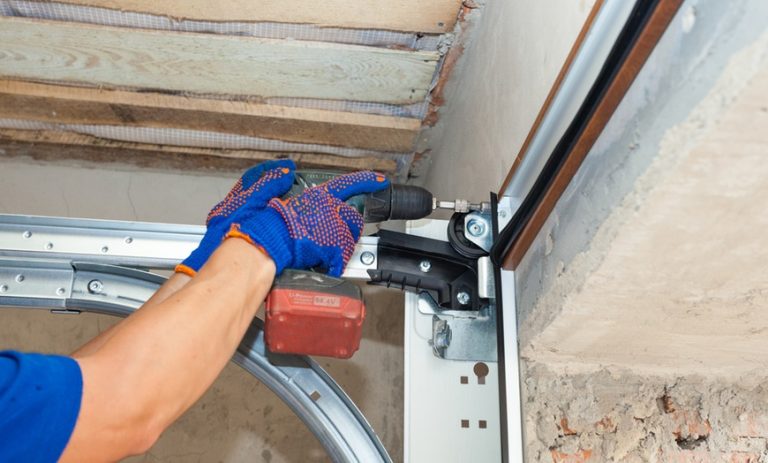
Most people don’t think about garage door weight until something goes wrong. You try to lift it manually, expecting a little resistance, and instead you’re pinned to the floor wondering if you just threw your back out for good. That moment—when you realize the springs aren’t doing the heavy lifting—is when the question hits: how heavy is a garage door without springs?
The short answer is somewhere between 130 and 400 pounds, depending on the material and size. A standard 16×7-foot steel door lands around 200 to 250 pounds. Double that for a solid wood door. And if you’re dealing with an old, uninsulated aluminum door, you might be looking at 90 pounds. The range is wide, and that’s exactly what makes this dangerous.
Key Takeaways
- A garage door without spring assistance weighs 130–400 lbs on average.
- Attempting to lift one manually without proper technique risks serious injury.
- Disconnecting springs is not a safe DIY task for most homeowners.
- Professional spring replacement costs far less than an emergency room visit.
Table of Contents
Why Springs Matter More Than You Think
The springs on a garage door are not optional equipment. They’re the counterbalance system that makes a 250-pound door feel like 10 pounds. Without them, you’re lifting the full dead weight of the door, plus the friction of the tracks and rollers.
We’ve seen customers who thought they could “just muscle it up” after a spring snapped. One guy in Buckhead used a floor jack and a 2×4 to prop his door open. It worked for about three hours until the jack slipped and the door came down on his truck. That repair cost more than a new spring installation would have.
The physics here is straightforward. Torsion springs or extension springs store mechanical energy. When you open the door, the springs release that energy in a controlled way. When they break, you’re left with raw weight and no assistance. That’s not a workout—it’s a hazard.
The Real Weight by Door Type
We keep a rough chart in the truck because customers always ask. Here’s what we’ve measured over the years, based on actual doors we’ve serviced in Atlanta.
| Door Type | Size (ft) | Approx. Weight Without Springs | Common Issues |
|---|---|---|---|
| Single-layer steel | 8×7 | 130–160 lbs | Dents easily, loud operation |
| Double-layer steel | 16×7 | 200–250 lbs | Moderate insulation, corrosion in humid climates |
| Triple-layer insulated | 16×7 | 250–300 lbs | Heavy, requires heavy-duty springs |
| Solid wood (pine) | 8×7 | 200–250 lbs | Warping in humidity, rot near bottom |
| Solid wood (oak) | 16×7 | 350–400 lbs | Extremely heavy, needs commercial-grade hardware |
| Aluminum/glass | 16×7 | 90–120 lbs | Light but fragile, track wear from wind |
These numbers aren’t theoretical. We weighed a 16×7 oak door from a home in Druid Hills last year. It came in at 387 pounds. That door had two torsion springs, both snapped. The homeowner had been lifting it manually for two weeks before calling us. He said he was “getting stronger.” We told him he was getting lucky.
What Happens When You Try to Lift a Garage Door Without Springs
The first mistake people make is underestimating the weight. A door that heavy doesn’t move smoothly. It jerks, binds, and wants to fall. The tracks are not designed to support that kind of load without the springs balancing it. So when you lift, you’re fighting gravity, friction, and a door that’s trying to come down on your head.
We’ve seen three common outcomes from DIY lifting:
- Pulled muscles in the back, shoulders, or arms.
- Pinched fingers or crushed hands when the door slips.
- Damaged tracks or rollers from uneven force.
One customer in Decatur tried to open his door after a spring failure by pulling from the bottom. The door came off the track on one side, bent the bracket, and cost him $450 in parts and labor. A spring replacement would have been under $300.
When the Weight Becomes a Safety Issue
Garage doors without springs are not just heavy—they’re unpredictable. The center of gravity shifts depending on how the door is balanced. If one spring breaks but the other is intact, the door will twist. That twisting force can snap cables, bend tracks, or pull the door out of alignment.
We’ve responded to calls where a homeowner tried to disconnect the springs themselves. That’s a bad idea. Torsion springs are under extreme tension. Releasing them without the proper tools and training can send metal flying at high speed. It’s not a “be careful” situation. It’s a “call someone who knows what they’re doing” situation.
If you’re in Atlanta, the humidity and temperature swings make spring fatigue worse. We replace more springs in July and August than any other months. The heat accelerates metal fatigue, and the humidity causes rust on extension springs. So if you’ve got an older door, don’t assume the springs will hold forever.
Common Misconceptions About Door Weight
One myth we hear constantly: “My door is light because it’s aluminum, so I can lift it without springs.” Aluminum doors are lighter, sure, but they’re still 90 to 120 pounds. That’s not light. And the tracks and cables are still under tension. Lifting an aluminum door without springs can still cause cable snap or track damage.
Another myth: “I can just add more springs to make it lighter.” Springs are matched to the door’s weight. Adding a stronger spring doesn’t make the door easier to lift—it makes it dangerous. The door might fly up too fast, or the extra tension could snap the cables. We’ve seen doors launch off the tracks because someone installed the wrong springs.
Then there’s the idea that you can “balance” a door by adjusting the springs yourself. Spring adjustment requires winding bars, torque measurements, and knowledge of the door’s weight distribution. Most homeowners don’t have the tools or the experience. And honestly, we’ve seen too many garage doors that were “adjusted” by a YouTube video and ended up causing injuries.
The Role of Professional Help
At some point, you have to decide whether your time and safety are worth the money. A professional spring replacement for a standard residential door runs $200 to $400 in Atlanta. That includes the springs, labor, and a safety check. Compare that to a trip to the ER for a crushed hand or a pulled back muscle.
We’re not saying you can’t ever touch your garage door. Basic maintenance—lubricating rollers, tightening bolts, cleaning tracks—is fine. But when the springs are involved, or when the door is off balance, that’s where we draw the line.
Atlanta Garage Doors has seen every variation of this problem. From the homeowner who used a ratchet strap to hold his door up (it failed at 2 AM) to the guy who thought a car jack under the door was a good idea (it wasn’t). The common thread is that people underestimate the weight and overestimate their ability to control it.
Alternatives to Lifting a Heavy Door
If your springs are broken and you need to get the door open, there are safer options than brute force.
First, if you have a backup battery system for your opener, use it. Many modern openers have battery backups that can lift the door even with broken springs—though it will strain the opener. Use it sparingly.
Second, if you must open the door manually, use the emergency release cord to disconnect the opener, then lift from the bottom with your legs, not your back. Keep your body close to the door. Do not jerk or yank. If the door feels stuck, stop. Forcing it will cause damage.
Third, call a professional. We know that sounds like self-promotion, but it’s also the honest answer. A broken spring is not an emergency that requires immediate opening unless there’s a fire or medical situation. If you can wait a few hours, a technician can have you back in operation safely.
When the Solution Isn’t Appropriate
There are situations where lifting the door manually is the wrong move entirely. If the door is off its tracks, do not try to lift it. You’ll bend the tracks further and risk the door falling. If the cables are frayed or snapped, lifting the door can send cable strands flying. If the door is a solid wood model over 300 pounds, do not attempt to lift it alone. Even with two people, the weight distribution is awkward and dangerous.
We’ve also seen cases where the door itself is damaged—rotten wood, rusted panels, or broken hinges. In those cases, lifting the door can cause the panels to separate. That’s not a repair you want to deal with on a Saturday afternoon.
A Final Word on Weight and Safety
Garage doors are heavy because they have to be. They’re built to withstand wind, impact, and daily use. The springs are what make them manageable. Without springs, you’re fighting physics, and physics doesn’t care about your workout routine.
If you’re in Atlanta and your door feels heavier than it should, or if a spring broke and you’re wondering what to do, give us a call. We’ll come out, measure the weight, match the springs, and have you back to normal within a few hours. It’s faster, safer, and cheaper than the alternatives.
And if you’re reading this because you just tried to lift your door and now your back hurts—well, you’re not the first. But hopefully, you’ll be the last to try it twice.
Related Articles
Garage Door Weight Calculator
Garage Door Weight Kg
Top Signs Your Garage Door Springs Need Replacement
People Also Ask
A standard 7 ft by 9 ft single-car garage door typically weighs between 70 and 130 pounds, depending on the material. A basic uninsulated steel door with thin panels will be on the lighter end, around 70 to 90 pounds. Insulated steel doors, which have a polyurethane or polystyrene core, usually weigh between 100 and 130 pounds. Solid wood doors are the heaviest, often exceeding 150 pounds. Always check the manufacturer's label for the exact weight, as this figure is critical for selecting the correct torsion spring. Attempting to lift or replace a door without proper equipment can be dangerous. For safe installation or spring adjustment, consider professional service from Atlanta Garage Doors.
No, you cannot have a functional garage door without springs. Springs are the critical counterbalance system that offsets the door's weight, which can be 150 to 300 pounds or more. Without them, the opener motor would have to lift the entire load, leading to immediate burnout, and manual operation would be impossible and dangerous. In rare cases, a torsion spring system can be replaced with a different mechanism, but every residential garage door relies on some form of tension. If you suspect a broken spring, do not attempt to open the door. Contact Atlanta Garage Doors for a safe, professional replacement to restore proper balance and prevent injury.
A garage door that feels heavy to lift manually is usually a sign of a broken or failing torsion spring system. These springs counterbalance the door's weight, which can be 150 pounds or more. If a spring snaps, the door becomes extremely heavy and dangerous to operate. Other causes include seized rollers, damaged hinges, or a twisted or kinked track. Never attempt to force a heavy door open, as the cables and hardware are under immense tension. For a safe diagnosis and repair, contact a professional. If you recently pulled the emergency release and the door won't stay up, the issue may be with the spring balance. For specific guidance on that situation, please see our internal article How To Reset Garage Door After Pulling Emergency Release LiftMaster. Atlanta Garage Doors can inspect and rebalance your system to restore smooth, effortless operation.
A standard 2-car garage door typically weighs between 130 and 160 pounds for a non-insulated steel model. However, the exact weight depends heavily on the material and construction. A single-layer steel door is the lightest, while a double-layer or insulated steel door can reach 170 to 200 pounds. Solid wood doors, which are popular for their aesthetic appeal, are significantly heavier, often tipping the scales at 250 to 300 pounds or more. This weight is crucial because your garage door opener must be strong enough to lift it, and your torsion springs must be precisely calibrated to counterbalance the load. For a detailed breakdown of weight factors, please refer to our internal article titled How Heavy Is A Garage Door In Pounds. At Atlanta Garage Doors, we always recommend a professional assessment to ensure your system is safely matched to your door's specific weight.
The weight of a garage door without springs varies significantly based on its size and material. A standard single-car steel door (8x7 feet) typically weighs between 130 and 160 pounds. A double-car door (16x7 feet) can weigh anywhere from 250 to 350 pounds, while solid wood or carriage-style doors are much heavier, often exceeding 400 pounds. Without working springs, you are lifting this entire load manually. Attempting to do so is dangerous and can cause severe injury or damage to the door's tracks. If you suspect a spring issue, do not force the door open. Instead, contact a professional for a safe inspection and repair. At Atlanta Garage Doors, we recommend immediate service to prevent accidents and further mechanical failure.
To calculate the correct torsion or extension springs for your garage door, you must first determine the door’s total weight. A professional-grade method involves using a spring calculator that factors in the door's height, width, and the wire gauge of the existing springs. However, the most accurate starting point is a manual weight measurement using a bathroom scale and a helper. Disconnect the opener, lift the door halfway, and place the scale under the center bottom bracket. Record the reading, then multiply by two for the total weight. For a precise calculation, use our internal article titled 'Garage Door Weight Calculator' at Garage Door Weight Calculator. This tool helps you input your specific dimensions to find the correct spring IPPT (inch-pounds per turn). At Atlanta Garage Doors, we always recommend consulting a certified technician for spring replacement, as improper tension can cause severe injury or door damage. Never attempt to adjust springs without the proper winding bars and safety training.
To accurately determine the weight of your garage door, you must first identify its construction material and thickness. A standard single-car steel door typically weighs between 130 and 150 pounds, while a double-car door can range from 200 to 300 pounds. Solid wood doors are significantly heavier, often exceeding 300 pounds for a double-car size, which directly impacts the required spring tension. For a precise estimate, you can use our internal article titled Garage Door Weight Calculator, which factors in dimensions and material density. However, for exact specifications, always check the manufacturer's label on the door's end stile or consult a professional. If you are in the Atlanta area, Atlanta Garage Doors offers free on-site assessments to ensure your springs and opener are correctly matched to the door's actual weight, preventing premature wear and safety hazards.
To accurately weigh a garage door with extension springs, you must first disconnect the springs by releasing all tension. Use a sturdy ladder and remove the safety cables before unhooking the springs from the track pulleys. Once the springs are detached, the door should move freely. The most reliable method is to use a bathroom scale: place it under the bottom panel and carefully lower the door onto it, ensuring the scale is centered. Record the weight, then repeat on the opposite side and add the two readings for the total door weight. For a precise calculation without lifting, our internal article 'Garage Door Weight Calculator' at Garage Door Weight Calculator provides a formula based on panel dimensions and material density. Always use a second person for safety, as a standard door can weigh 150 pounds or more. If you are unsure, Atlanta Garage Doors recommends scheduling a professional torsion spring replacement to avoid injury.
A standard single-car garage door (typically 8x7 feet) weighs between 60 and 90 pounds, while a double-car door (16x7 feet) usually ranges from 130 to 160 pounds. However, the exact weight depends heavily on the material: steel doors are lighter, while solid wood or insulated models can be significantly heavier. Knowing this weight is critical for selecting the correct torsion springs, which must be matched precisely to counterbalance the door. Using mismatched springs can cause the opener to fail prematurely or create a dangerous situation. For a precise calculation based on your door’s exact dimensions and material, we recommend using our internal article titled Garage Door Weight Calculator. At Atlanta Garage Doors, we always advise consulting a professional for spring replacement to ensure safe and balanced operation.

