
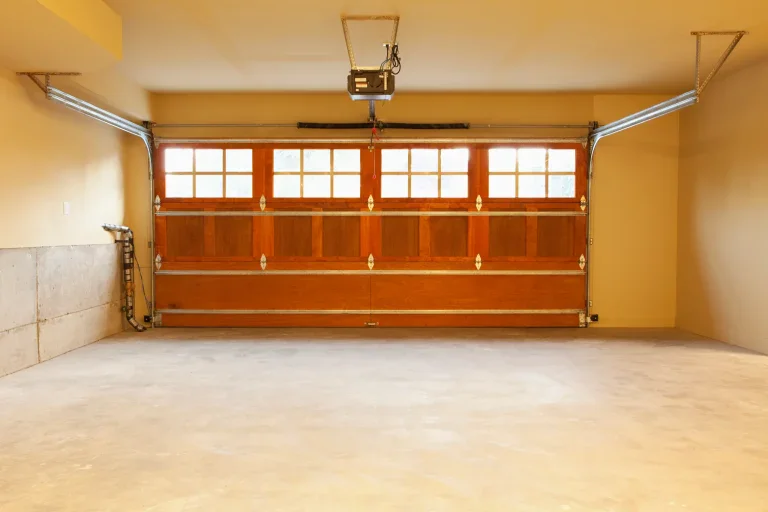
Ever have one of those moments where you’re sitting in your driveway, clicking that garage door remote like your life depends on it, and nothing happens? We’ve all been there. It’s a special kind of modern frustration, right up there with a buffering video. But here’s the thing we’ve learned from years in the business: your garage door is a lot more complex and important than most of us give it credit for. It’s the largest moving part of your home, your main entry point, and a huge contributor to curb appeal and security. So, let’s chat about it—not in a boring manual kind of way, but like fellow homeowners who’ve seen it all.
Table of Contents
Getting to Know Your Garage Door’s Personality
Think of your garage door system like a team of athletes. Every part has a job, and if one player gets injured, the whole game falls apart. We see it every day in Atlanta, from Marietta to Dunwoody.
The Heavy Lifters: Springs and Cables
These are the MVPs, doing the brutal work of lifting hundreds of pounds of door. Torsion springs (mounted above the door) and extension springs (on the sides) are under insane tension. IMO, this is the number one reason you should never, ever attempt a DIY repair on them. A broken spring isn’t just an inconvenience; it’s dangerous. The same goes for the garage door cable replacement. When a cable snaps, it’s often a dramatic affair that can damage other components or, worse, cause injury. This is a textbook job for a pro.
The Brain and Brawn: Opener and Motors
Your automatic garage door repair needs usually center here. Is it making a terrible grinding noise but not moving? Is it reversing for no reason? Modern openers are smart, with safety sensors and programmed travel limits, but they’re not infallible. Sometimes it’s a simple sensor alignment; other times, the motor gear is stripped. We love walking a homeowner through the quick checks over the phone, but often, a trained eye from a trusted garage door company is the fastest fix.
The Unsung Heroes: Tracks, Rollers, and Weather Sealing
Ever wondered why your door sounds like a tank rolling over rocks? Worn rollers or a misaligned track are usually the culprits. And those seals at the bottom and sides? They’re what keep Georgia’s red clay dust, summer downpours, and surprisingly chilly Alpharetta mornings from invading your garage. Neglecting them is basically inviting the outdoors in for a permanent sleepover.
When to Call in the Cavalry (That’s Us!)
Look, we’re all for being handy. But some projects scream “call a professional.” How do you know it’s time?
- That ominous ‘bang’ from the garage. This is almost always a spring breaking. Game over. Door won’t open. Time to call.
- A door that’s crooked or shaking violently. This usually points to a cable issue or a serious track misalignment. Forcing it can cause catastrophic damage.
- The opener runs, but nothing moves. This often means the opener’s clutch is disengaged (a safety feature), or a critical mechanical part has failed.
- Any issue with the high-tension components. We’ll say it again: springs and cables are not for amateurs.
This is exactly where a local, experienced team shines. When you search for the nearest or most reliable service, you’ll find a mix of big franchises and local specialists. At Atlanta Garage Doors, we’ve built our reputation on being the local crew you can count on. Why? Because we live here too. We understand the specific wear and tear our humidity and temperature swings cause. Whether it’s a standard residential garage doors fix or a more complex commercial garage doors system for a local business, we’ve seen it. And when you have a true emergency at 8 PM on a Sunday? You won’t get a call center; you’ll get one of our technicians.
Choosing Your Garage Door Services: A Quick Guide
Whether you’re facing a repair or considering a brand-new installation, the choices can be overwhelming. Let’s break down the big decision: repair vs. replace.
The Case for Repair
If your door is less than 15 years old, generally in good shape, and the issue is isolated (like a single spring or a sensor), repair is almost always the most affordable and sensible path. A good technician can extend the life of your system for years. FYI, always check the reviews for a company’s repair service specifically—it tells you a lot about their honesty and skill.
The Case for Replacement
Sometimes, throwing good money after bad just doesn’t make sense. Consider a new installation if:
- Your door is ancient, dented, or inefficient.
- You’re facing multiple major failures in a short time (springs one month, opener the next).
- You want modern safety features, smart home connectivity, or a serious curb appeal upgrade.
New materials and insulation tech are fantastic these days. The right new door can boost your home’s energy efficiency and value—not a bad investment at all.
Your Garage Door System: A Quick Reference
Let’s make this easy. Here’s a table that breaks down common symptoms, their likely causes, and the typical level of urgency.
| Symptom | Likely Culprit | Is It an Emergency? | Pro Tip |
|---|---|---|---|
| Loud BANG, door won’t open | Broken Spring | Yes. Do not attempt to open. | This is a high-risk repair. Call a pro immediately. |
| Door is crooked, hangs unevenly | Snapped Cable or Track Issue | Yes. Risk of further damage or collapse. | Secure the area and call for service. |
| Opener motor runs, door doesn’t move | Broken Spring, Cable, or Opener Clutch | Medium. Manual operation may be possible. | Try disengaging the opener (red cord) to lift manually. If it’s still heavy, it’s a spring issue. |
| Door reverses before hitting floor | Obstructed Safety Sensors | Low. A safety feature doing its job. | Check for dirt, cobwebs, or misalignment of the sensors near the floor. |
| Grinding, screeching noises | Worn Rollers, Dry Hardware | Low-Medium. Gets worse over time. | Can often be remedied with lubrication, but worn rollers need replacement. |
Let’s Answer Your Burning Questions
We hear these all the time, so let’s tackle them head-on.
1. “How often should I actually service my garage door?”
Great question! We recommend a professional tune-up once a year. Think of it like an oil change for your car. A tech will lubricate moving parts, check spring tension, test safety reverses, and tighten hardware. This preventative step catches small issues before they become big, expensive headaches. It’s the best way to ensure smooth, safe operation and extend the life of your entire system.
2. “Can I just install my own garage door opener to save money?”
You can, but should you? The installation itself is straightforward for a handy person. The critical part is programming the safety features—the force settings and travel limits. Set these incorrectly, and you have a door that could crush an object (or worse). If you’re confident, follow the manual to the letter. But for total peace of mind, having a pro handle it ensures it’s done safely and integrates perfectly with your existing door balance.
3. “What’s the real difference between residential and commercial garage doors?”
It boils down to scale, durability, and use. Residential garage doors are for a few cycles a day, prioritizing aesthetics and insulation. Commercial garage doors are built for constant, heavy use in warehouses or shops. They’re often made from heavier-duty materials (like industrial steel), have larger motors, and are designed for faster operation to maintain workflow. Using a residential door in a commercial setting is a fast track to frequent repairs.
Wrapping It All Up
So, what’s the takeaway from our little chat? Treat your garage door with a bit of respect. Listen to its weird noises. Give it some annual TLC. And most importantly, know when a job is out of your league. There’s no shame in calling for backup—in fact, it’s the smartest thing you can do.
Whether you’re near Alpharetta, Marietta, Dunwoody, or anywhere else in the metro area, having a reliable local expert on speed dial is just good sense. We’re biased, but we believe Atlanta Garage Doors fits that bill. We’re your neighbors, we love this city, and we’re passionate about keeping your homes and businesses running smoothly, one garage door at a time. Next time you hear that concerning grind or that fateful bang, you know what to do. Give us a shout 🙂
Related Articles
How To Frame A Garage Door
How Much Does A 7ft Garage Door Weigh?
Garage Door Energy Efficiency ROI Calculator For Georgia Homes
Garage Door Spring Repair Cost in Atlanta, GA (2026 Guide)
People Also Ask
Weatherproofing a garage is a smart investment, and the cost varies widely based on the scope of work. A basic DIY project, focusing on new rubber bottom seals and vinyl weatherstripping for the sides and top, typically costs between $50 and $150 in materials. If you hire a professional for this basic sealing, labor usually brings the total to $200 or $400. For a more comprehensive upgrade, including insulation for the walls and garage door, spray foam around gaps, and a new threshold seal, costs can range from $500 to $1,500 or more. The exact price depends on your garage's size and the materials chosen. For a precise estimate tailored to your home, Atlanta Garage Doors recommends scheduling a quick inspection to identify air leaks and structural gaps.
For a standard 20x20 garage (400 square feet), professional epoxy coating typically costs between $1,200 and $2,800. This price range depends heavily on the condition of your concrete, the type of epoxy system used, and whether you choose a solid color or decorative flakes. Basic DIY kits run $300 to $600, but professional installation ensures proper surface preparation, including diamond grinding and crack repair, which is critical for durability. Higher-end moisture-tolerant or 100% solids epoxy systems cost more but last longer. For an accurate quote in the Atlanta area, contact Atlanta Garage Doors for a detailed estimate tailored to your slab's specific needs. Remember, investing in quality prep work is the key to a flawless, long-lasting finish.
Waterproofing a garage in the Atlanta area typically costs between $1,500 and $6,000, depending on the scope. For basic interior wall sealants and a new epoxy floor coating, you might spend $1,200 to $2,500. If you need exterior excavation, drainage systems, or a sump pump to handle groundwater, the price can climb to $8,000 or more. The final figure depends on square footage, the severity of moisture intrusion, and whether you address cracks or grading issues. A professional inspection is essential, as surface fixes often fail without proper exterior water diversion. At Atlanta Garage Doors, we often remind homeowners that a dry garage protects not only your vehicle but also the structural integrity of the home, so investing in quality waterproofing is worthwhile.
Yes, you can absolutely weatherproof a garage, and it is a smart investment for protecting your vehicles and belongings. Start by inspecting the rubber seals along the bottom and sides of the garage door; replace any that are cracked or brittle. Next, apply weatherstripping to the door jambs and use a door sweep to close gaps at the floor. For the walls and ceiling, seal any cracks with caulk and consider adding insulation panels to control temperature and reduce moisture. Finally, ensure proper drainage by grading the concrete floor away from the entrance. For a complete guide on the structural side, see our internal article titled Roll-Up Garage Door Framing. Atlanta Garage Doors recommends a professional annual inspection to catch wear before it leads to costly water damage.
Insulating a 24x24 garage, which gives you 576 square feet of wall and ceiling space, typically costs between $1,200 and $2,800 for materials and professional installation. The final price depends heavily on the insulation type. Fiberglass batts are the most economical, often running $1.00 to $1.50 per square foot, while spray foam offers superior air sealing but costs two to three times more. For a project this size, you should also factor in the cost of a vapor barrier and possible drywall replacement to cover the insulation, which adds to the total. For a precise estimate tailored to your specific garage structure, contacting a local specialist like Atlanta Garage Doors is a smart first step.
Insulating a garage ceiling in the Atlanta area typically costs between $1.00 and $2.50 per square foot for materials and professional installation. For a standard two-car garage of roughly 400 square feet, you can expect a total investment of $400 to $1,000. The final price depends on the insulation type (fiberglass batts, blown-in cellulose, or rigid foam), the R-value needed, and whether you are finishing the ceiling with drywall. Given our hot, humid summers and mild winters, upgrading your ceiling insulation not only stabilizes the temperature in the room above but also reduces your home's overall cooling load. To see if this project pays off for your specific home, be sure to check out our internal article: Garage Door Energy Efficiency ROI Calculator For Georgia Homes. For a precise quote tailored to your garage's dimensions, Atlanta Garage Doors recommends scheduling a professional energy audit.
Insulating a 20x20 garage (400 square feet) typically costs between $800 and $2,500 for materials and professional installation. The final price depends heavily on the insulation type and your local climate. For example, fiberglass batts are the most budget-friendly, averaging $1.50 to $3.00 per square foot, while spray foam offers superior air sealing but runs $3.00 to $6.00 per square foot. You will also need to factor in the cost of covering the insulation, such as drywall or plywood, which adds another $500 to $1,000. For an accurate estimate tailored to your Atlanta home, a professional from Atlanta Garage Doors can assess your walls, ceiling, and garage door to recommend the most efficient solution for your budget.

