
Most people don’t think about their garage door until the power goes out and they’re stuck. You pull into the driveway after a long day, hit the remote, and nothing happens. Or worse, you’re inside the garage trying to leave for work, and the door won’t budge. The motor is dead, the opener is useless, and suddenly a routine moment turns into a frustrating puzzle.
The good news is that closing (or opening) a garage door without power is almost always possible, and it doesn’t require special tools or a call to a technician. But doing it wrong can damage the door, injure you, or leave your home insecure. We’ve seen plenty of situations where a simple mistake turned a minor inconvenience into a costly repair.
Key Takeaways
- Every garage door opener has a manual release mechanism, usually a red cord with a handle.
- Releasing the door disengages it from the opener, allowing manual operation.
- You must lock the door after closing it manually, since the opener won’t hold it shut.
- Never force a door that feels stuck or unbalanced — that’s a sign of a broken spring or cable.
- If you live in an area with frequent storms or power outages, knowing this process ahead of time saves real stress.
Table of Contents
The Emergency Release: Your Only Friend in a Blackout
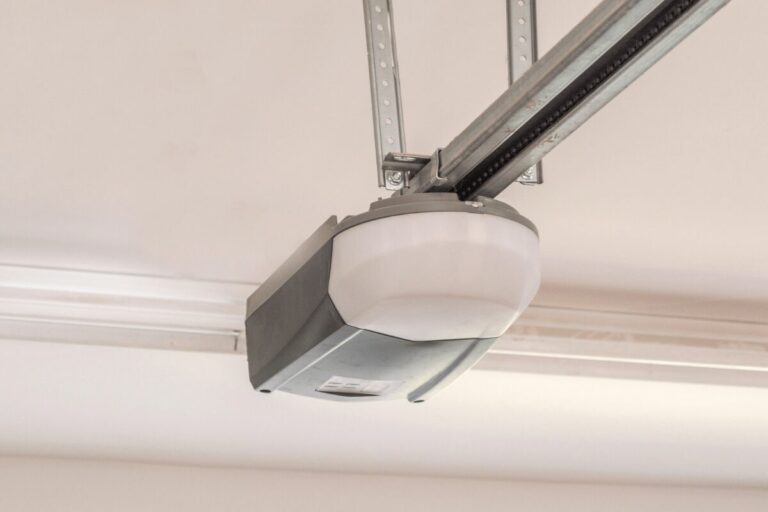
Inside every standard garage door opener is a carriage that connects the door to the motor’s drive chain or belt. That carriage is what pulls the door up and pushes it down. When the power cuts, the motor can’t move, so the carriage stays locked in place. The manual release is a small lever — usually attached to a red cord hanging from the opener rail — that disconnects the carriage from the trolley.
Pull that cord straight down, and you’ll hear a click. That click means the door is now free to move by hand. We always tell customers to test this when they first move into a home. It’s one of those “you’ll thank yourself later” moves. The cord can sometimes get tangled or stiff from years of disuse, so giving it a tug every few months keeps it from seizing up.
One thing people get wrong: they yank the cord sideways or at an angle. That can jam the mechanism or snap the cord. Pull straight down, firmly but gently. If it doesn’t release, don’t force it. Check for obstructions or call for help.
How to Close the Door Once It’s Released
Once the release is pulled, the door should move freely along its tracks. If you’re inside the garage and need to close it, simply guide the door downward using the handles or the bottom edge. Go slow. Garage doors are heavy, and if the springs are worn or broken, the door can drop like a stone. We’ve seen people lose grip and let the door slam, which can crack panels or bend tracks.
If the door feels unusually heavy or jerky when you try to close it, stop. That’s a strong indicator that one of the torsion springs has failed. In that case, closing it manually is risky — the door could fall suddenly or come off the tracks entirely. You’re better off calling a professional.
When you get the door fully closed, you’ll need to lock it manually. Most garage doors have a slide lock or a T-handle lock on the inside. Engage that lock. Without it, the door can be pushed open from the outside because the opener is no longer holding it in place. This is a step people forget all the time, and it’s how break-ins happen during outages.
What If the Door Is Stuck Partway Open?
This is where things get tricky. If the power goes out while the door is halfway up, you’re dealing with an unbalanced load. The door might be resting unevenly on the tracks or cables. Releasing the opener in that position can cause the door to shift suddenly.
We recommend propping the door with a sturdy object — like a ladder or a 2×4 — before pulling the release. Then, slowly lower the door while keeping your hands on the sides, not the bottom edge. The bottom edge can pinch fingers if the door slips. Use the side brackets or the handles if your door has them.
If the door is binding or scraping against the tracks, check for debris in the track channel. Leaves, pebbles, or even a bent track can stop the door cold. Clear what you can, but don’t try to bend a track back into place with a hammer. That usually makes things worse.
When You’re Outside and Need to Get In
This scenario is more common than you’d think. You come home, the power is out, and your car is in the driveway. The garage door won’t open, and the front door is locked. How do you get inside?
First, check if the garage has a side door. If it does, that’s your easiest path. If not, you’ll need to access the manual release from outside. Some garage doors have a keyed emergency release — a small lock on the outside of the door that connects to a cable. You insert a key, turn it, and pull the release from outside. Not all doors have this feature, especially older models.
If you don’t have an external release, you may need to lift the door slightly from the bottom to create enough gap to reach the release cord inside. This is easier with a two-person job: one person lifts the door an inch or two while the other reaches in to pull the cord. Be careful not to lift too high, or the door could spring up unexpectedly.
We’ve also seen people use a coat hanger or a long screwdriver to hook the release cord through the top seal. It’s not elegant, but it works in a pinch. Just be mindful of scratching the door or damaging the weatherstripping.
Common Mistakes That Lead to Bigger Repairs
Over the years, we’ve watched homeowners make the same errors again and again. Here are the ones that cost the most time and money:
- Forcing the door after releasing it. If the door won’t move, something is wrong. Forcing it can snap cables or bend tracks.
- Leaving the door unlocked after closing it manually. This is a security risk, plain and simple. Always engage the manual lock.
- Pulling the release while the door is under tension. If the door is partially open and the springs are loaded, releasing it can cause the door to crash down. Always support the door first.
- Re-engaging the opener without checking alignment. Once power returns, some people just hit the button. If the carriage isn’t aligned with the trolley, the opener can grind or damage itself. Walk the door up or down until you hear the carriage click back into place.
Should You DIY or Call a Pro?
For a simple power outage, DIY is perfectly fine. The manual release is designed for this. But there are clear lines where professional help is the smarter move.
- The door is off its tracks.
- You see broken cables or loose springs.
- The door is uneven — one side higher than the other.
- The door won’t move at all after releasing the opener.
- You hear grinding, popping, or snapping sounds.
For residents of Atlanta, where older homes often have original garage doors from the 80s or 90s, these issues are especially common. The humidity and temperature swings in Georgia can cause wooden doors to warp and metal tracks to corrode over time. If your door hasn’t been serviced in a few years, an outage might reveal underlying problems that need professional attention. Garage door systems are more complex than most people realize, and a small issue can escalate quickly if mishandled.
We’ve also seen cases where a homeowner called us after trying to force a door closed, only to find that they had bent the track and cracked a panel. That repair cost several hundred dollars. A simple service call would have been far less.
Cost Considerations and Trade-Offs
If you’re considering upgrading your system to avoid future hassles, here’s a realistic breakdown of what you’re looking at:
| Option | Approximate Cost | Pros | Cons |
|---|---|---|---|
| Manual release (no cost) | Free | Works with any opener; no tools needed | Requires physical effort; door not locked automatically |
| Battery backup opener | $200–$400 | Opens and closes normally during outages | Adds weight to opener; battery lasts 2–3 years |
| Keyed emergency release | $30–$80 | Allows outside access without lifting door | Requires installation; key can be lost |
| Smart garage controller with battery | $100–$250 | Remote monitoring and control via phone | Relies on Wi-Fi; battery life varies |
| Full spring replacement | $200–$400 | Restores smooth manual operation | Professional install recommended; dangerous DIY |
The battery backup is the most popular upgrade we see, especially for families who rely on their garage as the main entry point. It doesn’t solve every problem — if the opener motor fails, the backup won’t help — but for power outages, it’s a solid fix.
When Manual Operation Isn’t the Answer
There are situations where you shouldn’t even try to close the door manually. If you suspect a spring break, stay away. Torsion springs are under extreme tension and can snap violently. We’ve seen them punch holes in drywall and injure people. If you hear a loud bang and then the door won’t move, that’s a spring failure. Call a pro.
Similarly, if the door is frozen to the ground — which happens in colder climates, though less often in Atlanta — don’t yank it. Pour warm water along the bottom seal to break the ice. Forcing a frozen door can tear the bottom seal or damage the panels.
And if you’re elderly, have limited mobility, or just don’t feel confident handling a heavy door, there’s no shame in calling for help. It’s better to spend a little on a service call than to end up with a crushed finger or a broken door.
Final Thoughts
Knowing how to close your garage door without power is one of those skills that feels useless until it’s absolutely necessary. It takes about 30 seconds to learn and can save you from being locked out or leaving your home vulnerable. Test your manual release now, while the power is on. Show your family how it works. And if the door doesn’t cooperate, address the issue before the next outage hits.
The goal isn’t to turn you into a garage door mechanic. It’s to keep you safe and your home secure when things go sideways. And if you’re in the Atlanta area and find yourself staring at a door that just won’t cooperate, Atlanta Garage Doors has seen it all and can get you sorted quickly.
Related Articles
How To Open LiftMaster Garage Door Manually From Outside
How To Open Garage Door With Key
Where Do Garage Door Sensors Get Power From?
How To Open Garage Door Without Power
What to Expect During Garage Door Opener Installation in Atlanta, GA
People Also Ask
Yes, there is a way to close a garage door manually, and it is a crucial skill for any homeowner. If your power is out or your opener is malfunctioning, you can bypass the motor by pulling the red emergency release cord, which is usually located on the trolley above the door. This disengages the carriage from the chain or belt, allowing you to move the door by hand. Once released, you can guide the door down smoothly, keeping your hands on the sides to control its weight. For a detailed step-by-step process on both opening and closing, please refer to our internal article How To Open A Garage Door Manually?. If you encounter resistance or the door feels unbalanced, contact Atlanta Garage Doors for a professional safety inspection.
If your garage door refuses to close, forcing it is never recommended and can be dangerous. The most common culprits are misaligned safety sensors, a blocked photo-eye beam, or an issue with the limit switch settings. First, check for obstructions like leaves or cobwebs on the sensor lenses and ensure they are facing each other. If the door stops and reverses, the sensors are likely the issue. For a temporary bypass, you can hold the wall-mounted button until the door is fully closed, but this overrides safety features. For a permanent, safe solution, consult a professional. For detailed troubleshooting steps, please review our internal article titled How To Fix A Garage Door That Won’t Close via How To Fix A Garage Door That Won’t Close. Atlanta Garage Doors recommends scheduling a tune-up if the problem persists.
Yes, you can absolutely open your garage door manually during a power outage. Most residential garage doors are equipped with an emergency release cord, typically a red handle hanging from the overhead track. Pulling this cord disengages the trolley from the opener carriage, allowing you to lift the door by hand. Before doing so, ensure the door is fully closed to avoid it crashing down unexpectedly. Once released, lift smoothly and secure it with locking pliers or a clamp on the track if you need to keep it open. For a step-by-step visual guide, refer to our internal article titled 'How To Open Garage Door Without Power' via How To Open Garage Door Without Power. At Atlanta Garage Doors, we recommend testing this mechanism twice a year to ensure it functions smoothly when needed.
After a power outage, your garage door opener may lose its connection to the safety sensors or the remote, leaving the door unresponsive. First, check if the opener has a manual release cord (usually red); if it was pulled, the door is in manual mode. To relock, simply pull the cord again toward the motor to re-engage the trolley, then plug the unit back in. Next, press the wall button to confirm the door operates. If the remotes are not working, you may need to reprogram them by pressing the "learn" button on the motor unit and then the remote. For persistent issues, Atlanta Garage Doors recommends a professional safety inspection to ensure the auto-reverse mechanism is calibrated correctly.
If your garage door won't open or close due to a power outage, the first step is to locate the red emergency release cord, which hangs from the opener’s trolley. Pulling this cord disengages the carriage from the drive chain or belt, allowing you to operate the door manually. Once released, you can lift or lower the door by hand. For a smoother close, use the handle to guide it down, but be careful because the door is heavy and will drop quickly under its own weight. To restore automatic operation later, simply pull the cord toward the motor until you hear it click back into place. If your door uses a side-mounted jackshaft opener, the release is usually a red handle on the side of the motor. For persistent issues or if the door feels stuck, contact Atlanta Garage Doors for professional assistance to avoid injury or damage.
If your garage door won't open and you are stuck outside, the first step is to locate the emergency release cord. This red handle is typically found near the top of the door, hanging from the trolley. You will need to pull it firmly to disengage the carriage from the track, which allows you to lift the door by hand. For a more detailed, step-by-step visual guide on safely accessing and using this release mechanism from the exterior, please refer to our internal article titled How To Open LiftMaster Garage Door Manually From Outside. Once the door is disengaged, lift it slowly to avoid injury. Remember to re-engage the trolley before using your opener again. For professional assistance or repairs, Atlanta Garage Doors is here to help.
If you are locked out and need to open your garage door manually from the outside without a key, the first step is to check if your door has an emergency release cord. This red cord is typically located near the top of the door and connects to the trolley. To use it, you will need to break a window or access the release mechanism through a small hole, which often requires a coat hanger to pull the cord. This action disengages the opener, allowing you to lift the door by hand. For detailed step-by-step instructions, please refer to our internal article titled How To Open Garage Door With Key. If your door lacks this feature or the release is stuck, contact Atlanta Garage Doors for professional assistance to avoid damaging your door or opener.

