
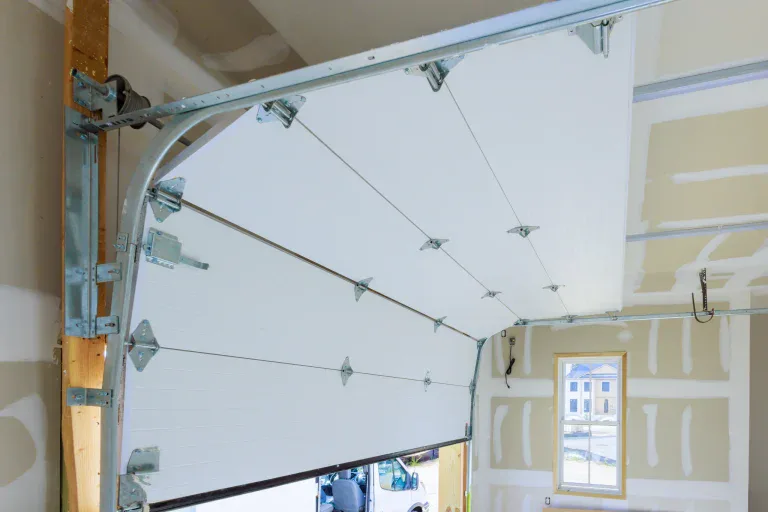
Let’s be honest, we don’t spend a lot of time thinking about our garage doors… until they stop working. Then, it’s the only thing we can think about. That grinding noise becomes our personal soundtrack, and the sight of a door that won’t close properly sends our stress levels through the roof. We get it. We’ve seen it all here in Atlanta, from a simple spring snap in Alpharetta to a full system failure in the middle of a Marietta downpour. So, pull up a chair, and let’s have a real talk about the unsung hero of our homes: the garage door.
Table of Contents
The Heart of the Home (No, Really)
We know, calling a garage door the “heart of the home” sounds like a stretch. But think about it. It’s our main entry point 90% of the time. It protects our cars, our tools, our holiday decorations, and all the other stuff we swear we’ll organize someday. A smooth, quiet, secure garage door gives us peace of mind. A problematic one? It’s a daily headache and a glaring security risk.
That’s why viewing garage door services as a “set it and forget it” project is a mistake. It’s a mechanical system with a lot of moving parts under immense tension. Treating it with respect and understanding its needs saves us a ton of trouble (and money) down the line.
When to Call for Backup: Repair vs. Replacement
This is the million-dollar question, isn’t it? How do we know if we need a quick repair or a full installation? As a garage door company that’s been serving Atlanta for years, we use a simple framework.
The Case for Repair
Most of the time, a targeted fix does the trick. Think of repairs like taking your car in for new brakes. You don’t need a whole new car.
Common Repair Candidates:
- That Awful Noise: Grinding, screeching, or banging usually points to worn rollers, loose hardware, or a lack of lubrication. This is often a quick, affordable fix.
- The Off-Balance Door: Disconnect your opener (pull that red cord!). Manually lift the door halfway. If it doesn’t stay put, your springs are out of whack. This is not a DIY project. The springs hold hundreds of pounds of tension.
- The Opener Gives Up: Your automatic garage door repair might just be a sensor realignment, a gear replacement, or a simple re-programming.
- A Single Broken Panel: Had a minor bump? Sometimes, we can replace just one section without redoing the whole door.
When Replacement is the Smarter Move
Sometimes, pouring money into an old system is like putting premium tires on a car with a blown engine. Replacement becomes the wise investment.
Signs It’s Time for a New Door:
- Major Component Failure: A broken torsion spring or a snapped garage door cable replacement on an very old, discontinued door model can make repair costs outweigh the value.
- It’s Just Old: Technology and materials have improved dramatically. An old, heavy, single-layer door is an energy hog and a security weak point.
- You’re Seeing Multiple Issues: When you’re facing spring problems, rotting wood, and a failing opener all at once, a new system is more cost-effective.
- The Aesthetic Upgrade: Let’s not underestimate curb appeal. A new door can transform the look of your house. IMO, it’s one of the best ROI home updates you can make.
Residential vs. Commercial: Different Beasts
We handle both, and the approach is night and day. Your home garage door prioritizes quiet operation, aesthetics, and security. Commercial garage doors are about durability, frequency of use, and often, specific functionality like high-speed operation or insulation for climate control.
A residential garage door might cycle 5-10 times a day. A commercial door in a busy warehouse might cycle hundreds of times. The hardware, the opener, the springs—everything is heavier duty. So, when a business owner near Dunwoody calls us with an emergency after-hours issue, we know it’s not just an inconvenience; it’s a halted operation. That’s a different kind of urgency, and we’re geared up for it.
Choosing Your Garage Door: It’s Not Just About Looks
Walking into a showroom can be overwhelming. Steel, aluminum, wood, windows, insulation… where do we even start? Let’s break down the big decision: insulation.
The Insulation Lowdown
Do we need an insulated garage door? If our garage is attached, and especially if it’s below a living space, the answer is a resounding yes.
- Temperature Control: It keeps heat out in summer and cold out in winter, making the space more usable (hello, home gym or workshop).
- Energy Bills: A non-insulated door is a giant hole in your home’s thermal envelope. Insulation helps your HVAC system not work overtime.
- Durability & Noise: Insulated doors are typically multi-layered and sturdier, which means they’re quieter and resist dents better.
Here’s a quick comparison of common insulation types:
| Feature | Polystyrene (EPS) Foam | Polyurethane Foam |
|---|---|---|
| Core Process | Pre-cut panels inserted between steel layers. | Liquid foam injected, expanding to fill every cavity. |
| R-Value | Good (R-8 to R-12 typically). | Excellent (R-12 to R-18+ typically). |
| Noise Dampening | Reduces noise noticeably. | Superior sound barrier; much quieter operation. |
| Structural Strength | Adds some rigidity. | Creates a bonded, super-rigid “sandwich” that is very strong. |
| Cost | Generally more affordable. | Higher initial investment, but greater long-term value. |
For most Atlanta homes, we see polyurethane as the winner. The strength, quietness, and superior insulation justify the cost, especially with our humidity and temperature swings.
The Opener: The Brain of the Operation
A great door needs a great opener. The days of the chain-drive clunker are over. Here’s what we recommend looking for now:
- Belt-Drive: Our go-to for quietness. Perfect for homes with bedrooms above or adjacent to the garage.
- DC Motor: Smoother operation, variable speeds, and often comes with soft-start/stop features.
- Wi-Fi Connectivity: This isn’t just a gimmick. Getting an alert that your door opened unexpectedly? Priceless. Closing it from your phone while you’re on vacation? Yes, please.
- Battery Backup: When the power goes out, you can still get your car out of the garage. A total game-changer.
Why Professional Installation Isn’t a “Nice-to-Have”
We’ll say this plainly: Garage door installation is not a DIY project. Those high-tension springs can cause serious injury or property damage if handled incorrectly. A professional does more than just hang a door. They ensure:
- Perfect balance and alignment for longevity.
- Correct spring tension for safe, smooth operation.
- Proper integration of safety sensors and opener settings.
- A full safety inspection of the entire system.
Trying to save a few bucks upfront can lead to costly emergency repairs later. And let’s be real, our time and safety are worth more than that. When you search for the nearest or most reputable service, dig into those reviews. Look for consistent praise about professionalism, punctuality, and clean work. That’s the standard we hold ourselves to at Atlanta Garage Doors on every job, whether it’s in Marietta, Alpharetta, or right here in the city.
Your Top Questions, Answered
“My door just stopped working. What’s the first thing I should check?”
Always check the obvious! Look at the tracks for a major obstruction. Peek at the sensors near the floor—are the little LED lights on and clear? Did someone bump the manual lock? Finally, check your circuit breaker or GFCI outlet the opener might be plugged into. If all that seems fine, it’s time to call a pro.
“How often should I actually maintain my garage door?”
We recommend a simple DIY check twice a year. Listen for unusual noises, visually inspect the springs for gaps (don’t touch them!), and test the auto-reverse safety feature by placing a 2×4 on the floor under the door. If it doesn’t reverse immediately on contact, your sensors need attention. A professional maintenance tune-up every 1-2 years is a great investment to catch small issues before they become big ones.
“How long should a new garage door system actually last?”
With proper installation and basic care, you can expect:
- Door Sections: 15-30+ years, depending on material.
- Springs: 7-15 years (based on cycle count).
- Opener: 10-15 years.
Quality components and expert installation are the keys to hitting the upper end of those ranges.
So, there you have it. Our garage door doesn’t have to be a mystery or a source of stress. It’s a system we can understand and take care of. Pay attention to its complaints (those weird noises), give it some periodic TLC, and know when to call in the experts. Whether you’re contemplating a stylish new installation for your home or need a reliable partner for commercial garage doors, we’re here to help. At Atlanta Garage Doors, we believe in getting it right the first time, because frankly, we all have better things to do than worry about a stuck door. Give us a shout next time yours acts up 🙂
Related Articles
The Best Garage Door Lubricant On The Market: Because Squeaky Hinges Are Not A Flex
Garage Door Noise Reduction Kit
How To Fix Roll Up Door Chain
People Also Ask
For garage door rollers, the best lubricant is a silicone-based spray or a white lithium grease specifically designed for garage doors. Avoid using WD-40 or heavy oils, as they attract dust and grit, which accelerates wear on the bearings and track. Silicone sprays are ideal because they dry into a thin, non-sticky film that reduces friction without collecting debris. Apply a light coat directly to the roller bearings and the stem where the roller meets the hinge, but never lubricate the tracks themselves, as this can cause the rollers to slip and misalign. For metal rollers with ball bearings, a few drops of light machine oil work well. At Atlanta Garage Doors, we recommend a professional-grade silicone lubricant for most residential systems, applied twice a year for smooth, quiet operation.
For sliding door rollers, a silicone-based spray lubricant is the best choice. Unlike oil or grease, silicone spray does not attract dust and dirt, which can quickly turn into a gritty paste that damages the rollers and track. Apply a small amount directly to the roller bearings and the inside of the track, then slide the door back and forth several times to distribute it evenly. Avoid using WD-40 as a primary lubricant, as it is more of a solvent than a true lubricant and will evaporate quickly. For heavy-duty or outdoor sliding doors, a lithium grease spray offers longer-lasting protection. If you are unsure about the condition of your rollers, Atlanta Garage Doors can inspect and replace worn parts to ensure smooth, quiet operation.
For garage door rollers, silicone spray is the better choice. WD-40 is primarily a solvent and light lubricant, which can actually attract dust and grime over time, leading to a gritty buildup that damages rollers and hinges. Silicone spray, on the other hand, is a true dry lubricant that repels moisture and dirt, providing long-lasting, smooth operation without leaving a sticky residue. It is also safer for the rubber seals and plastic components often found on modern doors. For best results, spray the roller bearings and hinges directly, but avoid the tracks. If your rollers are noisy or worn, Atlanta Garage Doors recommends a professional inspection to ensure your system remains balanced and safe.
To properly lubricate a roller garage door, start by cleaning the tracks with a dry cloth to remove dirt and debris. Use a silicone-based spray or lithium grease specifically designed for garage doors; avoid WD-40 as it attracts dust. Apply the lubricant sparingly to the rollers, hinges, and bearing plates, but never to the tracks themselves, as this can cause slipping. Focus on the moving parts where metal meets metal. After application, operate the door a few times to distribute the lubricant evenly. For a comprehensive guide on resetting your system after maintenance, refer to our internal article titled 'How To Reengage A Garage Door After Pulling A Red Cord?' via How To Reengage A Garage Door After Pulling A Red Cord?. Regular lubrication every six months will ensure smooth, quiet operation. For professional service, Atlanta Garage Doors recommends scheduling a tune-up to extend your door's lifespan.
For a garage door, the best lubricant is a silicone-based spray or a white lithium grease, not standard WD-40. Silicone sprays excel at lubricating rubber weather seals and nylon rollers without attracting dust and grime, which can cause premature wear. White lithium grease is better for metal-on-metal parts like hinges, springs, and bearing plates, as it provides a thicker, longer-lasting protective film. Avoid using heavy oils or grease on tracks, as this can cause the rollers to slip and lead to misalignment. For a comprehensive breakdown of top-rated products and application tips, refer to our internal guide: The Best Garage Door Lubricant On The Market: Because Squeaky Hinges Are Not A Flex. At Atlanta Garage Doors, we recommend a quarterly lubrication schedule for optimal performance and to extend the life of your door’s moving components. Always clean the parts before applying a fresh coat of lubricant.
For optimal performance, use a silicone-based or lithium-based garage door lubricant. Avoid WD-40 or standard grease, as these attract dust and grime, which can accelerate wear on rollers, hinges, and springs. A high-quality spray with a precision nozzle allows you to target the bearing surfaces without overspray. Apply lubricant to the rollers, hinges, and the top of the spring, but never to the tracks, as this can cause the door to slip. For a detailed breakdown of the best products and application techniques, refer to our internal guide The Best Garage Door Lubricant On The Market: Because Squeaky Hinges Are Not A Flex. Regular lubrication, ideally twice a year, keeps your door quiet and extends its lifespan. If you are unsure about the specific needs of your system, Atlanta Garage Doors recommends scheduling a professional tune-up to ensure all moving parts are correctly serviced.
For garage door rollers, a dry silicone spray is often the right choice, but it is not a universal fix. Standard liquid lubricants or grease attract dust and grit, which accelerates wear on the bearings and hinges. Before applying any spray, inspect the rollers for flat spots, cracks, or excessive play; if the nylon wheels are worn, lubrication will not solve the problem and replacement is necessary. When applying, spray directly into the bearing shaft, not the wheel tread, and wipe away any excess to prevent drips. For a complete maintenance routine, including proper tension adjustments and track cleaning, our internal article Garage Door Noise Reduction Kit offers a step-by-step guide. For professional inspection and tune-ups, Atlanta Garage Doors can ensure your system operates smoothly and quietly.

